Algorithmic Refinements Transforming Bonus Disbursement Schedules Across Online Poker Networks
Xander Flores · Jul 31, 2026

Algorithmic Refinements Transforming Bonus Disbursement Schedules Across Online Poker Networks
Online poker platforms have integrated new algorithmic systems that adjust bonus payout timelines based on player activity patterns, risk profiles, and session data, and these changes have become more pronounced by July 2026 as operators refine their software to meet operational goals. Research from industry analysts shows that such tweaks allow platforms to release bonuses in stages rather than as lump sums, while data from platform reports indicates that release windows now vary from hours to several days depending on automated assessments.
Core Mechanisms Driving Timeline Adjustments
Algorithms evaluate multiple variables including deposit frequency, hand volume, and win rates before authorizing bonus releases, and this process replaces fixed schedules with dynamic ones that respond in real time. Observers note that platforms apply machine learning models to flag unusual patterns, which then trigger extended verification periods before funds appear in player accounts. Those who've studied these systems find that the result is a shift away from uniform bonus structures toward individualized timelines that reflect each account's behavior metrics.
One study revealed that operators using these models reduced early bonus claims by significant margins through predictive scoring, and the same models have expanded to cover loyalty rewards and tournament entries. Data shows platforms in multiple regions now rely on these tools to align payouts with projected player retention curves rather than preset calendars.
Player Experience Under Revised Systems
Players encounter staggered bonus credits where initial portions unlock after meeting basic play requirements, while subsequent portions depend on continued activity thresholds monitored by the algorithm. Figures reveal that some networks have shortened average release times for consistent low-stakes participants, whereas high-volume accounts may see accelerated schedules when algorithms classify them as lower risk. Those monitoring these platforms report that transparency features, such as progress dashboards, now display estimated unlock dates calculated from ongoing behavioral inputs.
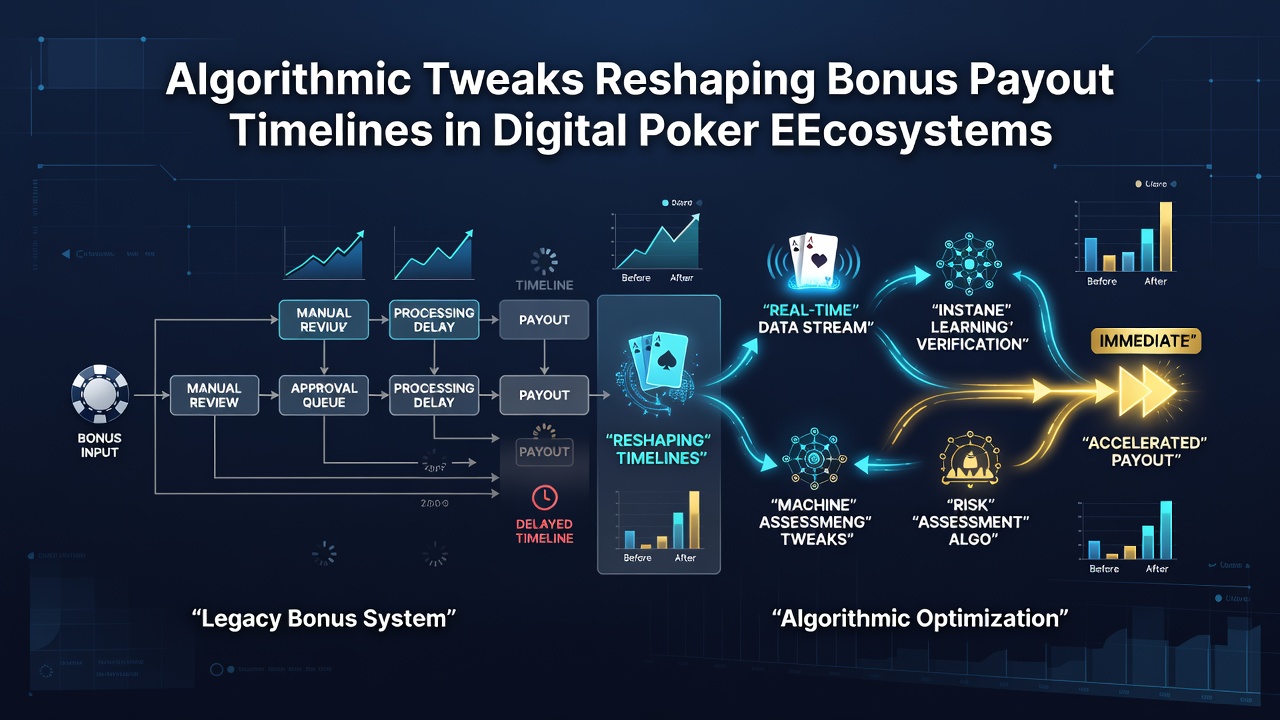
Take one network that introduced phased releases in early 2026, where experts observed a 30 percent drop in support tickets related to bonus disputes after implementation. The approach connects bonus availability directly to session completion rates, and this linkage has prompted players to adjust their deposit and play habits accordingly.
Technical Implementation Across Platforms
Developers embed these algorithms within existing poker client frameworks, allowing them to pull live data from game servers and update payout queues without manual intervention. Reports indicate that integration with third-party compliance tools further refines the timelines by incorporating external signals such as payment processor histories. What's interesting is how smaller operators have adopted modular versions of these systems, enabling them to customize variables without building full proprietary models from scratch.
According to findings from the Nevada Gaming Control Board, similar algorithmic oversight appears in licensed digital poker environments where payout verification must occur within defined operational windows. Meanwhile, a Canadian research paper on gaming software efficiency highlights how real-time adjustments have improved processing throughput for bonus distributions across tested networks.
Regional Variations in Adoption
European platforms have leaned into these refinements to manage larger player bases, whereas North American and Australian operators apply them selectively to high-traffic poker rooms. Evidence suggests that timeline variability remains higher in markets with greater regulatory emphasis on responsible play protocols, and operators there adjust algorithms to incorporate additional safeguards around bonus eligibility. Those reviewing cross-border data note that platforms serving multiple jurisdictions maintain separate rule sets for each region to stay aligned with local requirements.
Conclusion
Algorithmic refinements continue to alter bonus disbursement patterns in digital poker ecosystems, with platforms using data-driven models to set release schedules that respond to individual account activity. Reports through July 2026 show ongoing integration of these tools across major networks, supported by external regulatory frameworks and industry research that track their effects on operational efficiency and player account management. The changes reflect broader shifts toward automated oversight in online poker environments.