Britain's Virtual Table Dynamics: How Real-Time Analytics Reshape Strategy in Regulated Online Card Play
Xander Flores · May 17, 2026

Britain's Virtual Table Dynamics: How Real-Time Analytics Reshape Strategy in Regulated Online Card Play
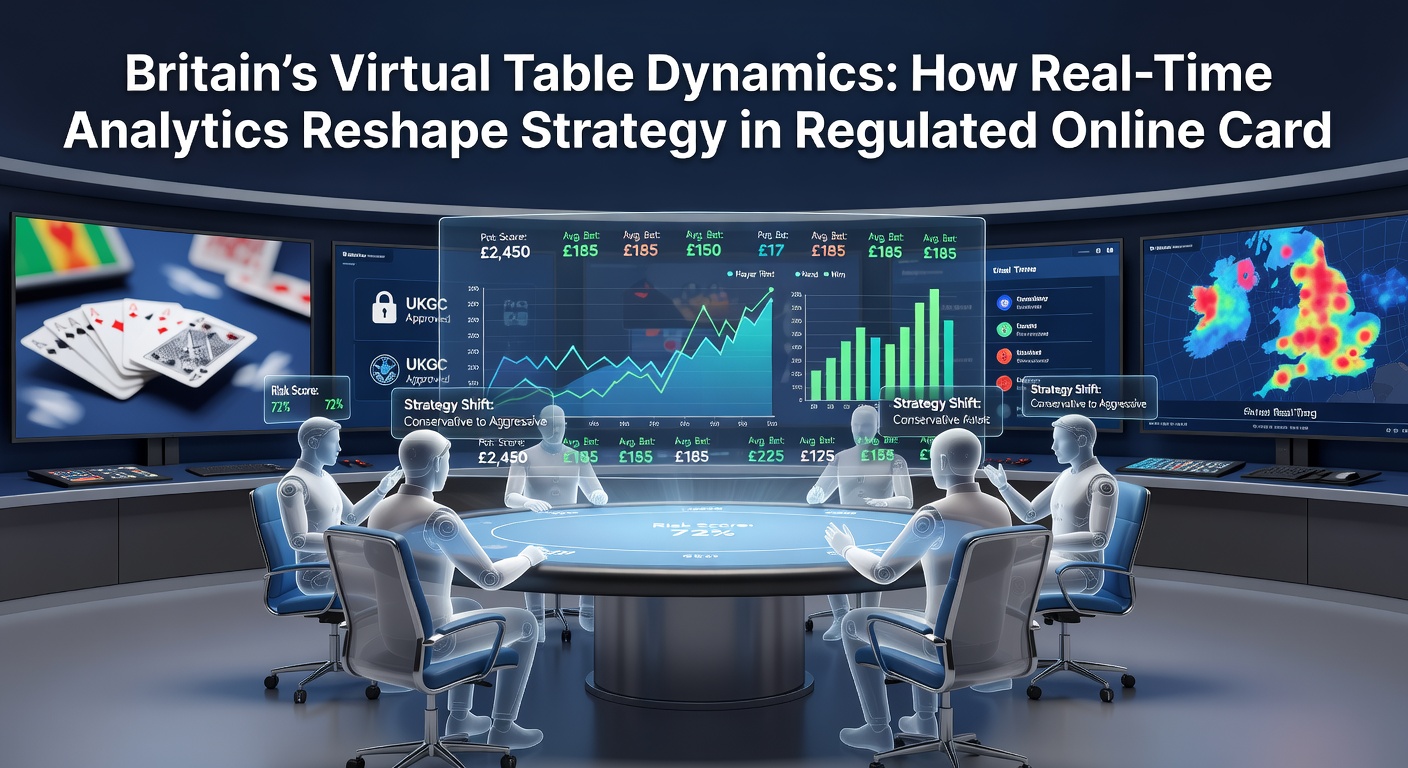
Britain's regulated online card play sector has integrated real-time analytics into virtual table environments at a rapid pace, with operators deploying systems that track player actions, betting patterns, and decision timing across platforms offering poker, blackjack, and baccarat. These tools process streams of data during live sessions to generate insights that influence both operator oversight and individual player approaches, while physical betting outlets prepare for widespread closures beginning in May 2026.
Data Streams Fueling Virtual Table Operations
Operators collect information on hand frequency, fold rates, raise sizing, and session duration through integrated software that updates every few seconds, allowing adjustments to table configurations or promotional structures without interrupting play. Research from the University of Nevada's International Gaming Institute indicates that platforms using these feeds achieve higher retention because they align game variants with observed preferences, and such systems also flag unusual activity patterns for compliance teams.
Players gain access to personal dashboards displaying metrics like win rates by position and aggression factors, which they review between hands to refine choices at subsequent tables. This setup creates a feedback loop where historical performance data informs immediate strategy shifts, particularly in multi-table tournaments where time constraints limit manual calculation.
Strategy Adjustments Through Live Metrics
Participants who monitor real-time indicators often alter their ranges based on opponent tendencies displayed in overlays, such as VPIP percentages or three-bet frequencies that update continuously. Those who've studied this process note how software highlights deviations from optimal lines, prompting tighter play in high-variance spots or expanded bluffing when data shows passive table dynamics. Industry reports from the Canadian Gaming Association reveal that regulated sites incorporating these features see measurable changes in average hand duration as users apply the information mid-session.
Take one mid-stakes regular who adjusted river betting after analytics revealed frequent calls from specific player pools, resulting in documented improvements tracked across hundreds of hands. Similar patterns emerge when groups review shared session replays annotated with probability models, turning individual observations into collective tactical refinements.
Regulatory Frameworks Supporting Analytical Integration
Systems must comply with standards that require transparent data handling and responsible gaming prompts triggered by threshold metrics, such as extended session lengths or rapid deposit increases. Platforms link these alerts directly to analytics engines so interventions occur precisely when patterns indicate elevated risk. Observers note that this linkage maintains fairness across virtual tables while supporting broader industry shifts toward digital formats ahead of the May 2026 retail contractions.
Cross-border operators draw on models tested in jurisdictions like Australia, where the Australian Communications and Media Authority has documented successful deployment of behavioral analytics to reduce problem gambling indicators. British sites adapt similar architectures, ensuring that real-time processing remains compatible with licensing conditions without compromising game integrity.
Case Examples from Platform Deployments
One established poker network introduced heat maps showing table tightness levels, which helped recreational users select suitable environments and prompted professionals to diversify across multiple tables with complementary dynamics. Data collected over six months showed increased session volumes on tables featuring these visualizations. Another operator applied predictive modeling to tournament structures, adjusting blind intervals based on average decision speeds captured in real time, which balanced pace for mixed skill levels.
Researchers at academic centers focused on gambling studies have examined these implementations and found correlations between analytics access and longer-term player engagement, provided safeguards prevent over-reliance on automated suggestions. The approach aligns with evolving expectations in Britain's market where participants seek tools that enhance rather than replace judgment.
Emerging Developments and 2026 Outlook
Advancements in processing speed now allow integration of external variables such as time-of-day trends or concurrent event influences into table recommendations. As physical venues reduce operations from May 2026 onward, operators redirect resources toward refining these digital systems, anticipating higher volumes that demand robust analytics to sustain fair play. Reports from the Malta Gaming Authority highlight parallel trends in European markets where virtual card rooms expanded following retail adjustments.
Future iterations may incorporate machine learning layers that simulate opponent responses based on aggregated anonymized data, offering scenario previews without revealing individual identities. This progression builds on existing foundations while addressing scalability concerns as participation grows.
Conclusion
Real-time analytics continue to define competitive edges at Britain's regulated virtual card tables by supplying actionable information that shapes both immediate decisions and long-term approaches. The convergence of player tools, operator oversight, and compliance mechanisms creates environments where strategy evolves continuously. With industry transitions accelerating toward May 2026, these systems position online card play as a data-informed domain that balances engagement with regulatory expectations across diverse participant groups.