Inside the Data Streams: How Behavioral Analytics Are Guiding Safer Play Features Across Digital Betting Platforms
Digital betting platforms now rely on continuous streams of user data to shape tools that promote controlled participation, and behavioral analytics sit at the center of those systems. Operators collect signals such as session length, deposit frequency, bet sizing patterns, and response times to identify shifts that may indicate heightened risk, then they trigger automated interventions without requiring manual oversight.
How Behavioral Analytics Operate in Practice
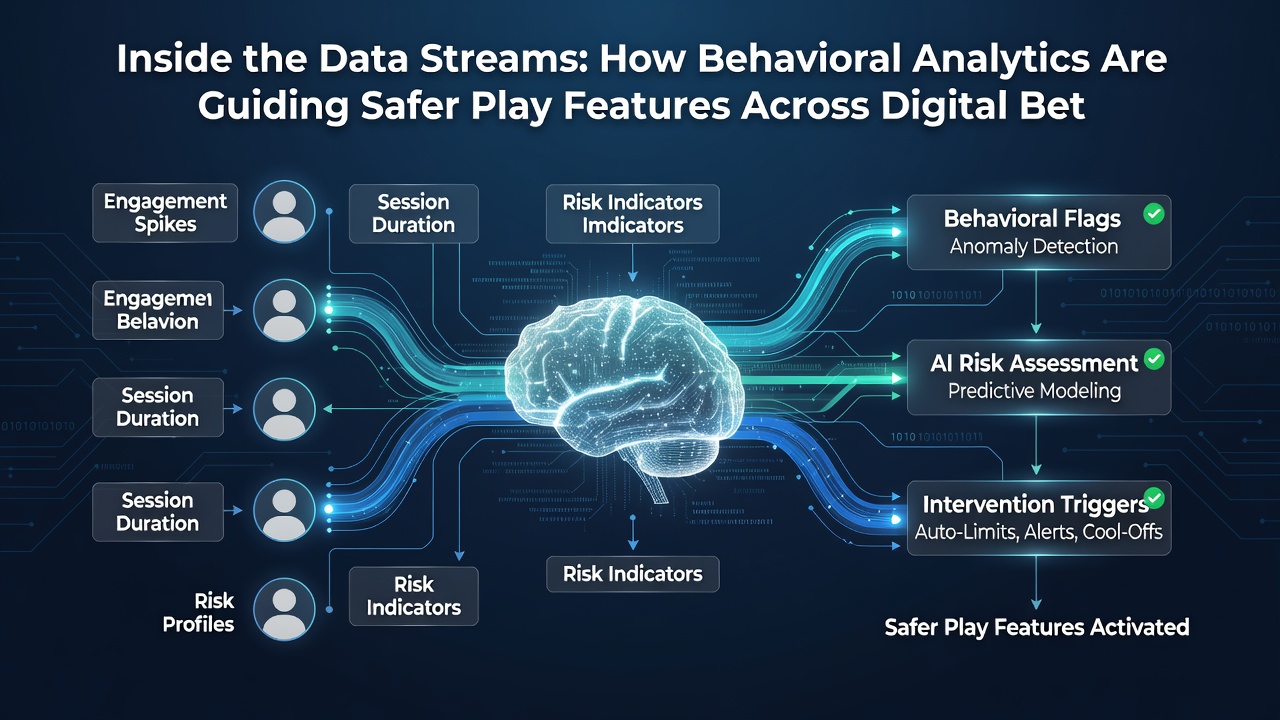
Algorithms process real-time inputs from millions of interactions each hour, comparing individual activity against aggregated historical baselines that researchers have refined over multiple years. When a user's pace accelerates beyond their established norm or when stake amounts rise sharply after a series of losses, the system flags the deviation and activates predefined responses. These responses range from gentle prompts reminding players of elapsed time to temporary pauses that require confirmation before further bets can be placed.
Platforms integrate machine learning models trained on anonymized datasets drawn from multiple jurisdictions, allowing the software to adapt thresholds according to regional regulations while maintaining consistent detection logic. Data scientists adjust model weights periodically to account for new game types and emerging user behaviors, keeping the system responsive without over-flagging routine fluctuations.
Safer Play Features Shaped by Continuous Monitoring
Deposit limit suggestions now appear dynamically when analytics detect repeated increases over short periods, and these suggestions draw directly from the user's own spending trajectory rather than generic caps. Time-out options activate automatically after extended sessions, with duration recommendations calibrated to patterns observed across similar demographic groups. Reality-check messages display at intervals that align with detected engagement spikes, presenting concise summaries of recent activity including total wagered amounts and net position.
Personalized risk profiles update nightly, pulling in the previous day's metrics to refine the next set of guardrails. Players receive access to dashboards that visualize these profiles, yet the underlying calculations remain opaque to prevent deliberate circumvention. Operators report that such features have led to measurable reductions in the frequency of high-velocity betting sequences, according to aggregated industry benchmarks released in early 2026.
Global Examples and Implementation Trends
Regulators in several regions outside the United Kingdom have begun mandating minimum analytics standards for license renewal. The Nevada Gaming Control Board, for instance, requires operators to demonstrate active monitoring protocols that link detected risk signals to concrete player protections. Similar expectations appear in guidance from the Australian Communications and Media Authority, where platforms must log intervention outcomes and make summary statistics available for periodic review.
One documented case involved a North American operator that introduced velocity-based alerts after internal analysis showed clusters of rapid-fire wagers correlating with elevated complaint volumes. The feature reduced those clusters by more than thirty percent within the first quarter of deployment, according to figures shared with the American Gaming Association. Another initiative in Malta linked session-length triggers to voluntary self-exclusion prompts, producing a documented uptick in players choosing short breaks rather than full exclusions.
Technical and Regulatory Considerations Through Mid-2026
By June 2026 many platforms had expanded their analytics stacks to incorporate biometric signals such as touch pressure and scroll speed on mobile devices, adding another layer of behavioral granularity. These additions required fresh data-protection assessments because they crossed into categories previously treated as optional. Compliance teams now coordinate with external auditors to verify that models do not inadvertently discriminate across age or geographic cohorts.
Research institutions have contributed independent evaluations; a working paper from the University of Sydney's Gambling Treatment and Research Centre examined how different alert timings affect user retention and found that context-aware messaging outperformed fixed-interval prompts. Operators reference such studies when calibrating their own systems, ensuring that interventions remain proportionate to observed risk levels.
Conclusion
Behavioral analytics continue to evolve as both the data sources and the protective mechanisms they support grow more sophisticated. Platforms that maintain transparent reporting on intervention efficacy while respecting privacy boundaries position themselves to meet rising regulatory expectations across multiple markets. The interplay between detection accuracy and user autonomy remains the central operational challenge, and ongoing refinement of these systems will determine how effectively digital betting environments balance engagement with harm reduction in the years ahead.