Ledger Lines and Lucky Spins: How Distributed Ledger Tech Reshapes Trust in Britain's Virtual Gaming Venues

Britain's virtual gaming venues have integrated distributed ledger technology in ways that extend beyond simple transaction tracking, and the shift has produced measurable changes in how operators establish verifiable records for players. Distributed ledger systems create shared, tamper-resistant databases where every deposit, withdrawal, and game outcome receives an immutable timestamp across multiple nodes, and this architecture reduces opportunities for unilateral alterations by any single party. Observers note that adoption accelerated through 2025 as platforms sought methods to demonstrate operational integrity without relying solely on centralized audits.
Transparency Mechanisms in Action
Smart contracts execute predetermined rules for game outcomes and payouts automatically once conditions are met, while the underlying ledger records each step for independent verification. Players gain access to cryptographic hashes that confirm results match stated probabilities, and several British operators began publishing these verification tools on their sites by early 2026. Data from industry reports indicates transaction settlement times dropped from hours to minutes in many cases, since consensus across the network replaces traditional banking delays. Researchers at various academic institutions have documented how this setup allows external parties to audit activity without accessing proprietary systems directly.
Payment and Record-Keeping Shifts
Distributed ledgers handle both cryptocurrency and fiat conversions through tokenized representations that maintain traceability, and this approach has supported compliance with anti-money laundering requirements across multiple jurisdictions. In June 2026 several platforms reported increased volumes of cross-border settlements processed via these channels, because the technology logs every intermediary step in a format that regulators from different regions can review. One study from a Canadian research group found that ledgers reduced reconciliation errors by 40 percent compared with legacy databases, while similar patterns emerged in European markets where operators adopted comparable infrastructure.
Those who have examined player behavior patterns note that verifiable transaction histories encourage repeat engagement, since users can trace funds from deposit through gameplay to withdrawal without gaps. British venues have introduced player-facing dashboards that display ledger excerpts in readable formats, and feedback collected by industry associations shows higher retention rates among users who regularly consult these tools. The reality is that trust here stems from the ability to cross-check records rather than from promotional claims alone.
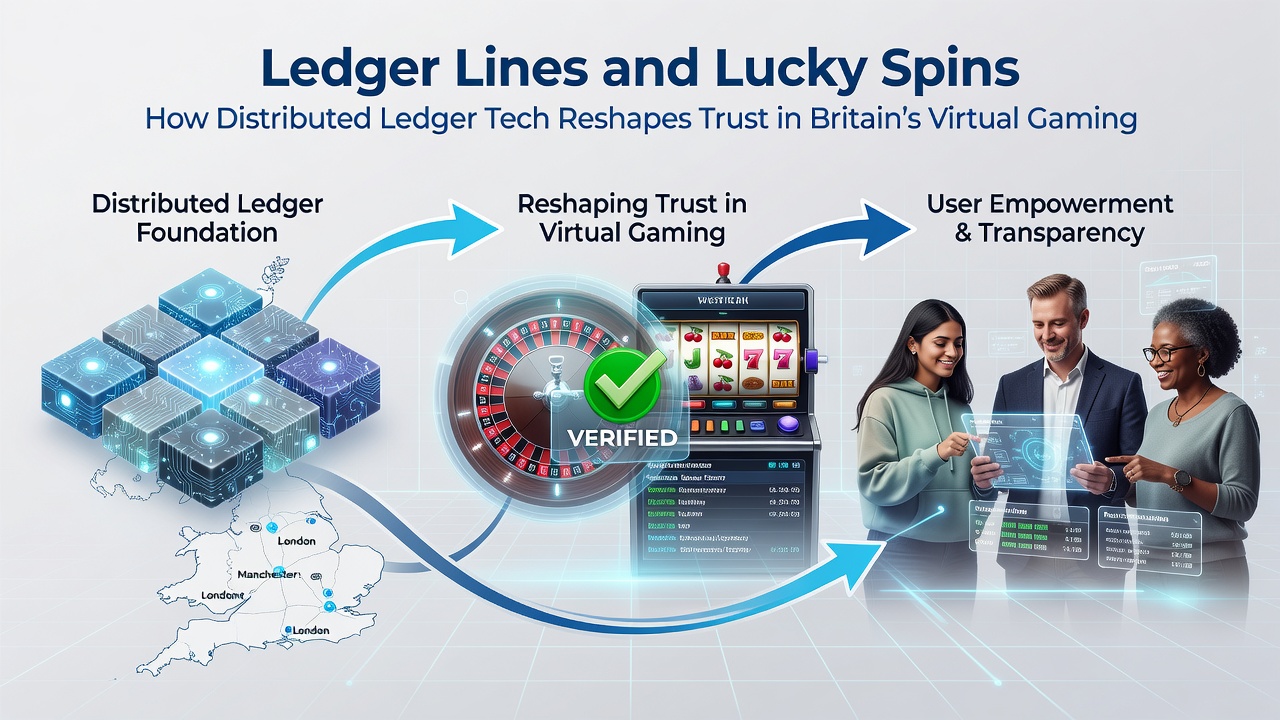
Provably Fair Systems and Game Integrity
Provably fair protocols built on distributed ledgers allow players to supply their own random seeds that combine with operator inputs to determine results, and the final hash appears on the public chain for later confirmation. Several major British sites rolled out these features for slots and table games throughout 2025, and participation data reveals steady uptake among users who previously expressed skepticism toward RNG claims. Academic papers from Australian universities have analyzed similar implementations and reported that the added verification layer correlates with reduced dispute volumes, since outcomes become independently auditable within minutes of play completion.
Operators face technical choices between permissioned and public ledgers, and British venues have leaned toward hybrid models that balance transparency with performance requirements. Permissioned chains restrict validator roles to licensed entities while still permitting player access to transaction logs, and this structure satisfies data protection rules while delivering the core benefits of immutability. What's interesting is how these decisions influence overall system costs, because public chains incur variable fees whereas permissioned versions offer predictable scaling.
Regulatory and Industry Context
European regulatory bodies have issued guidance encouraging exploration of ledger-based compliance tools, and British operators have responded by piloting systems that feed real-time data to oversight agencies without manual reporting cycles. Industry organizations such as the European Gaming and Betting Association have published frameworks that outline minimum standards for ledger integrity and player data handling. European Gaming and Betting Association reports highlight how distributed systems can streamline cross-border cooperation when multiple authorities need simultaneous access to records.
Challenges remain around energy consumption for certain consensus mechanisms and the learning curve for smaller operators, yet solutions such as proof-of-stake variants have lowered barriers. In June 2026 updates from research institutions tracking global adoption showed British platforms among the leaders in live dealer integrations that combine ledger verification with streaming outputs. Those who've studied implementation timelines note that early movers gained competitive edges through demonstrable security certifications that appealed to both players and institutional partners.
Future Trajectories and Ongoing Developments
Integration with emerging payment rails continues, and some venues now accept stablecoins settled directly on ledgers to minimize volatility exposure. University-led research from the United States has modeled scenarios where ledger-based loyalty programs issue tokens that players redeem across multiple sites, creating network effects that centralized systems struggle to replicate. British operators testing these models report smoother player transitions between desktop and mobile environments because account states remain synchronized across the shared database.
The ball remains in the court of technology providers to refine user interfaces so that ledger features feel intuitive rather than technical. Observers expect further standardization of verification protocols by late 2026 as more platforms converge on common open-source libraries. Evidence from pilot programs suggests that when players understand how to check hashes and transaction chains, confidence metrics improve measurably across demographic groups.
Conclusion
Distributed ledger technology has supplied Britain's virtual gaming venues with tools that convert abstract promises of fairness into auditable facts, and the pattern of adoption through 2026 demonstrates sustained investment in these infrastructures. Payment transparency, provably fair mechanics, and streamlined compliance reporting represent concrete outcomes rather than theoretical advantages, while ongoing refinements address remaining technical and operational hurdles. As more platforms embed these capabilities, the sector continues to evolve toward systems where trust derives directly from verifiable data structures instead of institutional assurances alone.