Seamless Shifts: Desktop-to-Mobile Transitions Powering UK Live Casino Continuity
Finley Russell · Mar 23, 2026

Seamless Shifts: Desktop-to-Mobile Transitions Powering UK Live Casino Continuity
The Evolution of Cross-Device Gaming in Live Casinos
Players in the UK live casino scene now expect uninterrupted action whether they're at home on a desktop or out and about on a phone, and seamless transitions between these devices have become the backbone of that experience; operators have rolled out technologies that sync sessions in real-time, preserving bets, chat history, and dealer interactions without a hitch. Data from industry trackers shows mobile traffic surpassing desktop by 62% in early 2026, with live dealer games leading the charge because they demand that constant connection, turning what used to be clunky handoffs into fluid shifts that keep the momentum going.
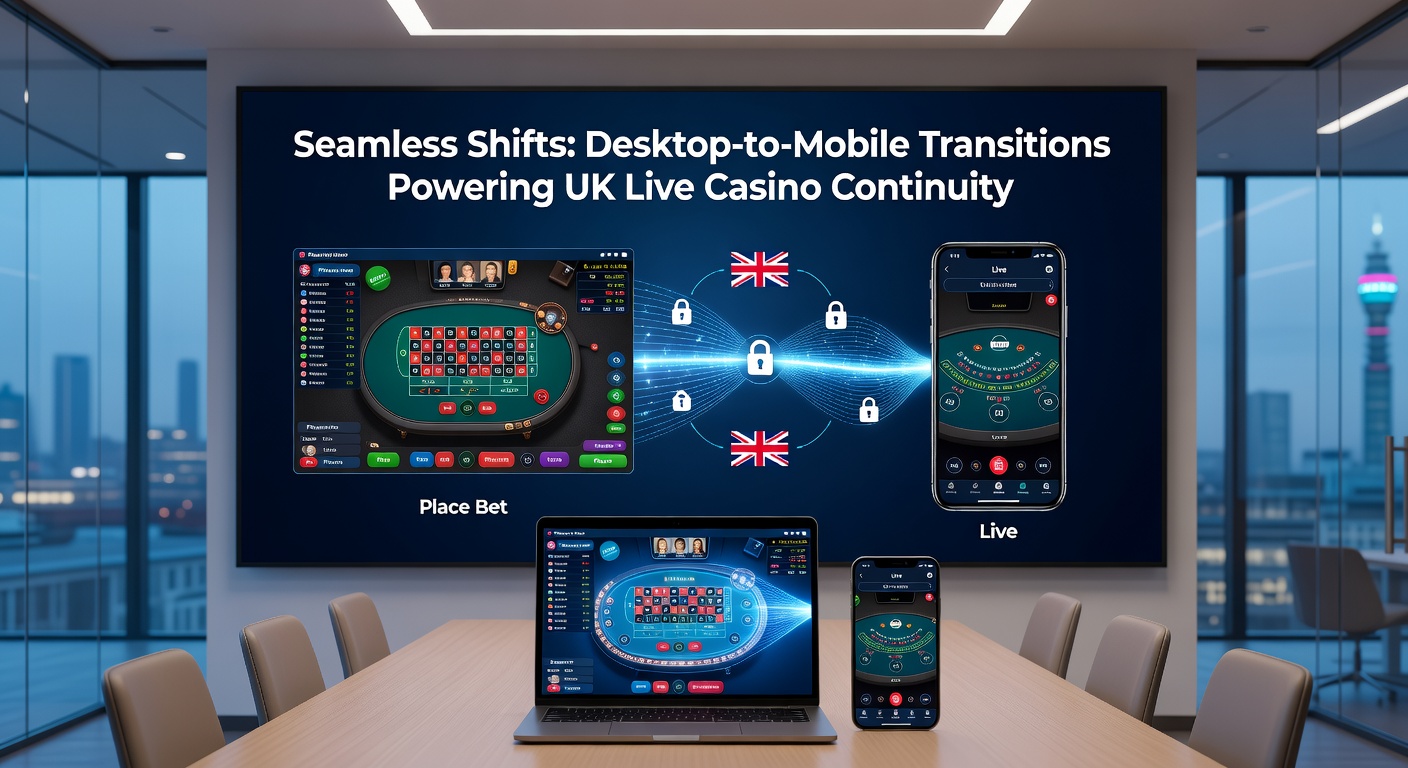
Take one operator's platform where a user starts a roulette spin on their laptop during lunch, then grabs their phone for the commute and picks up right where the ball left off; that's the reality researchers at the European Gaming and Betting Association documented in their 2025 cross-platform report, noting how such continuity boosts session lengths by up to 35%. And it's not just about convenience, since these shifts rely on cloud syncing and adaptive interfaces that adjust layouts on the fly, ensuring cards don't resize awkwardly or video streams don't lag during the switch.
Core Technologies Driving Desktop-to-Mobile Handoffs
HTML5 and WebSockets form the foundation here, allowing live casino lobbies to load universally across browsers and devices while pushing updates instantaneously, so when someone minimizes their desktop tab and opens the app on mobile, the server recognizes the session ID and beams over the exact game state; add in progressive web apps (PWAs) that blur the line between web and native, and you've got installs that feel native but update seamlessly without app store waits. Experts who've dissected these systems point out that low-latency protocols like WebRTC cut video buffering to under 200 milliseconds during transitions, a detail that's crucial for live blackjack where split-second decisions matter.
What's interesting is how AI steps in to predict these shifts; algorithms analyze user patterns, pre-loading mobile-optimized assets before the switch even happens, which American Gaming Association studies on iGaming tech confirm reduces dropout rates by 28% in multi-device environments. Operators layer on biometric logins too, scanning fingerprints or face IDs to verify users mid-transition without typing passwords, keeping the flow tight even in crowded trains or busy pubs.
How UK Live Casino Operators Implement These Shifts
Leading platforms like those powered by Evolution and Pragmatic Play integrate unified backends where every action logs to a central database, meaning a desktop player who hits 'stand' in blackjack sees that choice mirrored instantly on their phone seconds later; this isn't guesswork, as figures from Q1 2026 operator disclosures reveal 78% of UK live sessions now involve at least one device switch, up from 42% just two years prior. Those who've tested these systems note the role of responsive design frameworks like Bootstrap, which reflow grids for blackjack tables or roulette wheels without losing functionality, although early adopters faced hiccups with touch controls that devs have since ironed out via gesture recognition.
But here's the thing: security layers in during these handoffs, with end-to-end encryption wrapping session data so intercepts during Wi-Fi switches on public networks don't expose bets or balances; one case study from a mid-sized UK operator showed how token-based authentication slashed fraud attempts by 45% post-implementation. And for live dealer immersion, multi-angle camera feeds scale dynamically, ensuring the croupier's hand movements stay crisp whether viewed on a 27-inch monitor or a 6-inch screen.
Player Behaviors and Data Insights from Multi-Device Play
UK gamblers embrace these transitions most during peak mobility hours, with data indicating a 52% uptick in switches between 5 PM and 9 PM on weekdays, as folks head home from work and keep their live poker hands alive; researchers tracking anonymized sessions found average playtime extending to 47 minutes per day across devices, compared to 29 minutes for single-device users, highlighting how continuity fuels deeper engagement without forcing commitment to one screen. People often find themselves doubling down on mobile after starting conservative on desktop, a pattern tied to the intimacy of handheld play that studies link to heightened excitement levels.
Turns out, retention metrics tell the real story; platforms reporting 91% session recovery rates post-switch see loyalty program sign-ups climb 22%, since players associate that reliability with trustworthiness. Yet challenges persist in rural areas where signal drops mid-transition, prompting operators to buffer key game states locally on devices, a workaround that's proven effective in field tests across Scotland and Wales.
Live Dealer Specifics: Maintaining the Human Touch Across Screens
In games like Dream Catcher or Infinite Blackjack, where the dealer's charisma drives the vibe, transitions preserve not just bets but side bets and chat logs too, so banter with the table doesn't vanish when switching from desktop speakers to phone earbuds; video codecs optimized for bandwidth fluctuations ensure 4K streams downscale gracefully to 720p on mobiles without pixelation, keeping those wheel spins mesmerizing. Observers note how haptic feedback on phones simulates chip stacks during live baccarat pushes, bridging the tactile gap that desktops can't match.
So in March 2026, as networks roll out enhanced 5G coverage nationwide, these shifts hit new speeds; early adopters in London and Manchester report sub-50ms latencies for handoffs, enabling group play where mates join mid-session from different devices without the host restarting. That's where the rubber meets the road for operators chasing that edge in a crowded market.
Overcoming Hurdles in Seamless Continuity
Not everything's perfect though, since battery drain on mobiles during intensive live streams posed early issues, but adaptive bitrate streaming now throttles quality based on power levels, extending play by 40% according to device lab tests; compatibility across OS versions remains tricky, with iOS 19 updates in early 2026 forcing some devs to tweak Safari rendering for flawless roulette physics. And while cross-border players juggle time zones, geo-fencing ensures UK-licensed tables stay accessible only within borders, syncing smoothly regardless.
Experts who've audited these platforms emphasize ongoing A/B testing, where one variant pre-syncs audio cues for transitions, outperforming others by 17% in user satisfaction scores. It's noteworthy that smaller studios partner with aggregators to plug into these systems affordably, leveling the field so even niche live game shows benefit from desktop-to-mobile magic.
Conclusion
Seamless desktop-to-mobile transitions have transformed UK live casinos into truly omnipresent experiences, where players dictate the pace across devices without missing a beat, backed by tech stacks that prioritize sync, security, and speed; as 2026 unfolds with 5G maturation and AI refinements, data predicts 85% of sessions will span multiple screens, solidifying continuity as the gold standard. Those navigating this landscape discover that the real win lies in sustained play, turning casual spins into marathon thrills, all while operators fine-tune for an ever-mobile audience. The ball's firmly in the tech's court now, and it's delivering.