UK Gambling Commission Drops Q2 2025 Stats: GGY Climbs to £4.3 Billion as Participation Holds Steady at 48%
Finley Russell · Mar 11, 2026

UK Gambling Commission Drops Q2 2025 Stats: GGY Climbs to £4.3 Billion as Participation Holds Steady at 48%
The Fresh Data Drop from the Gambling Commission
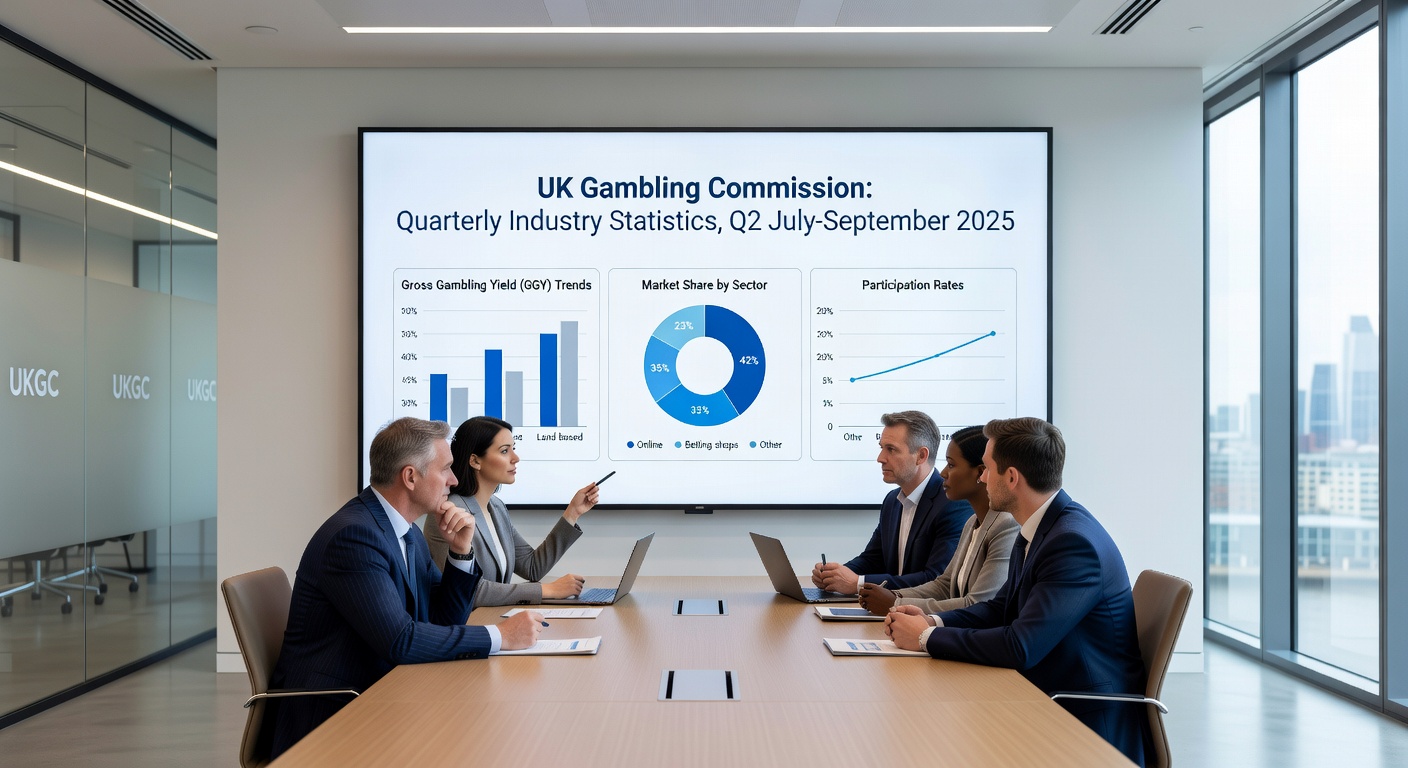
Observers note how the UK Gambling Commission just unveiled its quarterly industry statistics for Q2 of the financial year April 2025 to March 2026—covering July through September 2025—alongside the latest Gambling Survey for Great Britain (GSGB) Wave 3 from July to October 2025; these releases, timed for early 2026 discussions, paint a clear picture of a sector that's growing steadily while keeping participation levels even. Data shows Gross Gambling Yield (GGY) for customer-facing sectors hit £4.3 billion, marking a 6.6% jump from the same period last year, and that's no small potatoes when you consider how remote gambling, especially online casinos and lotteries, fueled most of that rise. Participation rates stayed rock-solid at 48% of adults reporting any gambling in the past four weeks, a stability that experts have observed amid broader market shifts; plus, the inclusion of new lotteries data rounds out the overview, giving analysts a fuller lens on the industry's pulse as March 2026 approaches with its fiscal wrap-up looming.
What's interesting here is the timing; with these figures landing in February 2026, stakeholders from operators to regulators get a mid-year checkpoint just before the financial year ticks into its final quarter, allowing for tweaks in strategies that could shape everything from compliance to marketing pushes. Turns out, the GGY growth isn't scattered—it's concentrated, driven by segments where digital access has taken hold, while traditional spots like betting shops hold their ground without much fanfare.
Breaking Down the £4.3 Billion GGY Milestone
Figures reveal that the £4.3 billion GGY encompasses all customer-facing operations, from land-based venues to the booming online space, up 6.6% year-on-year according to the Industry Statistics Quarterly Report; remote gambling led the charge, with casinos and lotteries posting the strongest gains, as players increasingly turn to apps and sites for quick sessions that blend convenience with variety. Experts point out how this remote surge—think slots spinning on phones or virtual bingo halls—offsets any flatlining in physical locations, keeping the overall yield climbing even as economic pressures linger from prior years.
And yet, the breakdown gets granular: lotteries, now freshly tracked in these stats, contributed meaningfully to that 6.6% uplift, pulling in crowds who might otherwise stick to free draws or scratch cards; remote casinos, meanwhile, saw operators report higher volumes from table games and progressive jackpots, where bets flow faster online than at a high-street wheel. One analyst reviewing the data noted how GGY, calculated as stakes minus winnings paid out, captures the true economic footprint—£4.3 billion means real revenue cycling back into taxes, jobs, and tech upgrades across the UK. But here's the thing; while growth sounds rosy, it's measured against Q2 2024, a period still rebounding from pandemic tweaks, so the trajectory feels sustainable rather than explosive.
People who've tracked these quarters over years often discover patterns like this one, where summer months—July to September—bring casual gamblers out for events betting or holiday lotteries, boosting remote figures without spiking land-based GGY much; that's where the rubber meets the road for operators balancing digital investments with high-street rents.
GSGB Wave 3: 48% Participation and What It Signals
Research indicates that overall gambling participation clocked in at 48% for adults over the past four weeks in the GSGB Wave 3 data, holding steady from previous waves and underscoring a mature market where not everyone's jumping in, but those who do stick around consistently; surveys covering July to October 2025 captured responses from thousands, blending self-reported behaviors with validated trends to ensure accuracy. This stability comes as no surprise to those who've studied the sector—it's hovered around these levels post-regulation changes, with online slots and sports betting anchoring regular play while lotteries draw occasional participants.
Now, the new lotteries inclusion adds depth; data shows these games, from national draws to smaller society runs, now factor into participation metrics, revealing how they nudge the 48% figure without inflating it wildly—think families buying tickets for the thrill, not daily punters grinding sessions. Observers note that this fuller picture helps regulators spot at-risk groups early, since stable rates don't mean uniform habits; younger adults lean remote, while older ones favor bingo halls or horses, creating a mosaic that's evolved little quarter-to-quarter.
Take one case from the survey methodology: respondents logging past-week activities showed lotteries boosting low-stakes engagement, keeping the 48% from dipping amid cost-of-living squeezes; that's significant because it highlights resilience, where participation neither surges on hype nor crashes on caution.
Remote Gambling's Role in Driving the 6.6% Growth
Sector-specific stats spotlight remote gambling as the growth engine, with online casinos raking in higher GGY through diverse offerings like live dealer blackjack or themed slots that keep sessions extending; lotteries complemented this, their digital sales platforms—apps for instant wins or syndicates—pulling in yields that traditional paper tickets couldn't match. Data from the quarterly report confirms this tandem effect, where remote GGY rose sharply while non-remote segments, like arcades and tracks, grew modestly or held flat, reflecting how players migrate to screens for 24/7 access.
It's noteworthy that this 6.6% overall bump aligns with broader tech adoption; operators who've invested in seamless mobile wallets and AI-driven personalization report stickier customers, turning one-off bets into repeat yields. And although land-based GGY contributes solidly to the £4.3 billion total, its slower pace underscores a shift—betting shops thrive on football seasons, but can't compete with remote's scale during off-peak hours.
So, as March 2026 nears with Q4 data on the horizon, these Q2 figures set expectations; if remote momentum holds, full-year GGY could push boundaries, but stable 48% participation suggests the market's reached a plateau where growth chases efficiency over expansion.
Broader Context and Forward Glances
Those analyzing the releases emphasize how the Gambling Commission's dual publications—industry stats plus GSGB—provide cross-verification, with GGY economics matching survey behaviors to validate trends; for instance, higher remote casino yields correlate with reported online play rates, closing loops that skeptics once questioned. The lotteries data integration, a fresh twist for 2025 reporting, ensures no blind spots, capturing a segment worth hundreds of millions in GGY that previous overviews skimmed.
Experts who've pored over past quarters often find summer dips in land-based offset by remote spikes—think festivals driving event bets via apps—mirroring this Q2 pattern exactly; participation at 48% reinforces that, showing adults engage selectively, with safeguards like affordability checks (rolled out earlier) keeping rates level. What's significant is the timing into 2026; with fiscal year-end in March, operators eye these stats for budgeting, while regulators use them to fine-tune rules on advertising or staking limits.
Yet, the story's in the details: GGY's 6.6% rise means £270 million more than last year circulating through the economy, funding everything from levy contributions to venue upgrades, all while participation avoids volatility that could signal problems.
Conclusion
In wrapping up, the UK Gambling Commission's Q2 2025 stats and GSGB Wave 3 deliver a snapshot of measured prosperity—£4.3 billion GGY up 6.6%, powered by remote casinos and newly detailed lotteries, alongside unwavering 48% adult participation; these figures, released ahead of March 2026's fiscal close, equip the industry with actionable insights, confirming a sector that's adapted digitally without losing its broad appeal. Data like this doesn't just number-crunch—it charts the path forward, where growth meets stability in a landscape that's anything but static.